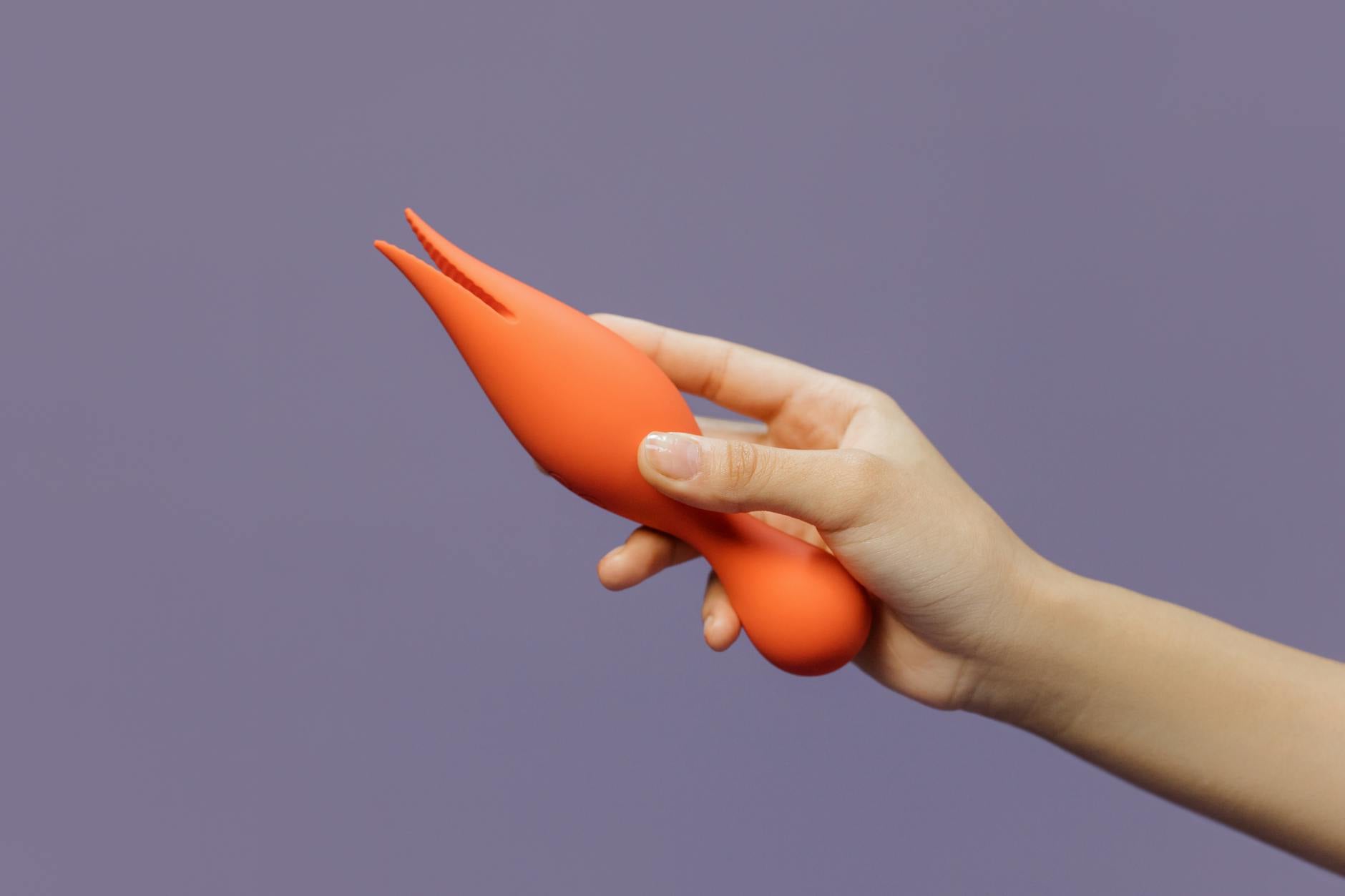
How Lemon Vibrators Help Reconnect With Pleasure After Relationship Changes
When a breakup, marriage shift, or new dynamic changes everything. How lemon clitoral vibrators rebuild sensation and remind you that pleasure is still yours.
When a relationship ends or shifts, the body doesn't forget how to feel good. But the mind does a terrible job remembering that. After a breakup, a long marriage becoming distant, or moving in with a new partner, sex often feels like it belongs to someone else's story. Not because your body stopped working. Because the context changed and nobody explained what to do next.
That's where lemon vibrators become unexpectedly powerful. They're not about replacing a partner or "getting over" anyone. They're about reclaiming the most fundamental fact: pleasure is yours. It lives in your body. It doesn't depend on the story you were telling yourself last year.
Relationship change rewires three things, not one. Most people notice only the emotional part and miss the practical and physiological ones.
First, the nervous system. When you've been intimate with one person for years, your body learns their rhythm, their touch, their presence. When that changes, your body goes into mild shock. Not trauma. Shock. Arousal takes longer. Sensation feels duller. You might not orgasm the same way. This is not failure. This is your nervous system recalibrating.
Second, the permission structure. Sex inside a committed partnership operates under one set of rules. Sex after a breakup, or in a new relationship, or rediscovering solo pleasure after a long monogamous stretch, operates under completely different ones. Your brain is still running the old permission software. That's why something that used to feel natural can suddenly feel awkward or unsafe, even though you're not in danger.
Third, the narrative. For years you might have told yourself "I'm a woman in a long-term relationship" or "I'm someone who has a partner who provides this." When that changes, you're not just losing a partner. You're losing the story that made your sexuality make sense. Rebuilding pleasure means writing a new story where you're the protagonist, not a supporting character.
Clitoral vibrators in general are reliable. But lemon vibrators, specifically the lemon suction design, offer something particularly useful when you're rebuilding: control without complexity.
After relationship change, many people feel hyperaware of their body in a way that kills pleasure. You're watching yourself have pleasure instead of having it. A traditional vibrator can feel like it requires active participation in that watching. The intensity is something you have to manage. The rhythm is something you've chosen but have to maintain.
Lemon clitoral vibrators work through suction and pulsation patterns, not direct vibration. This means the stimulation feels less like something you're controlling and more like something that's happening to you. That distinction matters because it bypasses the self-consciousness. You're not running the device. It's running, and you're free to just feel.
Many people also report that after years of one particular kind of touch, the novelty of suction-based stimulation wakes up sensation that had gone quiet. The tissue responds differently. The orgasm, when it comes, feels fresh rather than repetitive.
Four approaches that work well depending on where you are in the process.
Start with exploration, not performance. Set aside time when you have no expectation of orgasm. Use your lemon vibrator to relearn your own anatomy. What pressure feels good right now? Where? What pattern? You'll find that post-relationship, the answer might be different. That's not loss. That's data.
Use it as a reset button. If you're attempting partnered sex and it's awkward or anxiety-inducing, solo exploration with a lemon vibrator between those attempts can take the pressure off. You get the reminder that your body still works, that pleasure is still available to you, and that you don't need to perform perfectly for a partner in order to experience it.
Build a new ritual. After major relationship change, pleasure often comes back faster if you create a small, intentional routine. Light a candle. Play one song. Fifteen minutes with your lemon vibrator, no goal except sensation. This becomes the opposite of the casual, partnered sex you might have lost. It's deliberate. It's yours. Repeat it and your nervous system learns: this is safe. This is mine.
Integrate it into partnered sex, slowly. If you're with a new partner and things feel off, introducing a clitoral vibrator isn't about what your partner is or isn't doing. It's about adding a layer of sensation that helps your body remember what pleasure feels like. Many people find that once their body re-experiences satisfaction during partnered sex, even with a device, the confidence carries over to partnered sex without one.
The nervous system is slow. You've probably heard that before in a frustrating way. But it's also hopeful.
If your relationship change was recent (within the last three months), expect sensation to feel muted for a while. Six to twelve weeks of regular solo pleasure, using tools like a lemon vibrator, usually brings noticeable shifts. Your body starts to remember how to respond. Your brain stops running interference.
If the relationship lasted years and the change is more significant (a long marriage ending, moving from partnered to solo, or vice versa), the timeline is longer. Give yourself four to six months of consistent, patient exploration before deciding anything is broken. It usually isn't. It's just recalibrating.
If you're jumping into a new relationship quickly after change, understand that your nervous system is probably not ready. That doesn't mean the new relationship is wrong. It means your body needs a beat to catch up. Solo exploration with a lemon vibrator can actually speed this up because you're working with your own nervous system instead of trying to sync with someone else's on a compressed timeline.
Using a vibrator after relationship change isn't just physical. It's often grief wearing a pleasure disguise, or shame masquerading as "I'm broken."
If you find yourself resistant to solo pleasure after a breakup, that resistance usually has a reason. You might feel disloyal to someone who's still in your life. You might feel like you're admitting the relationship is really over. You might feel shame that you need a tool when previously you didn't. All of that is real and all of it is worth sitting with before you decide it means something about your capacity for pleasure.
I usually tell people: pleasure is political. After a relationship change, reclaiming it is an act of reclaiming yourself. Not to punish an ex or prove something. But to remind yourself that your body, your sensation, your satisfaction, belongs to you and always did.
A lemon vibrator is a simple tool. But in the context of rebuilding after relationship change, it becomes something like a permission slip. Your body doesn't need permission from anyone to experience pleasure. Sometimes, though, your mind does. And sometimes you need to give it to yourself.
There's no shame timeline. If you feel ready, you're ready. Some people want to reclaim solo pleasure immediately. Others need a beat. Neither is wrong. What matters is that you're doing it for yourself, not because you think you should or because you're trying to prove something. If you find yourself forcing it, it might be too soon. If you feel relief when you explore, it's probably time.
Absolutely. Different partners mean different rhythms, pressures, and timing. Your nervous system was calibrated to someone else's body. Using a lemon clitoral vibrator solo helps you remember what your own body likes, independent of a partner. That knowledge is portable. You bring it into the new relationship. Many people find that once they've relearned their own pleasure, partnered sex improves because they know what they're working with.
Guilt usually signals that you've internalized a false rule about what your sexuality should look like. (Loyalty to an ex? Shame about needing a tool? Fear that you're not "enough"?) Sit with the guilt. What story is it protecting? Once you see it, you can decide if it's actually yours or if it belongs to someone else's expectations. Pleasure experts usually find that guilt softens with curiosity and time, especially when you're doing something consistently.
Completely normal. Your clitoris has thousands of nerve endings, and different types of stimulation wake them up differently. After a long relationship with one particular rhythm or touch, your body might respond better to something novel. That's not abnormality. That's adaptation. A lemon suction vibrator introduces a stimulation type that fingers or traditional vibrators might not provide, which often feels fresher and more effective.
You can. Whether you should is a different question. In healthy partnerships, solo pleasure isn't threatening. It's human. If you feel you need to hide it, that might be worth examining. Either the relationship has trust issues worth addressing, or you've absorbed shame about your own sexuality that deserves unpacking. If your partner would feel insecure about you exploring your own body, that's information worth having.
Straight. "I'm relearning what feels good to me, and I'd like to use a vibrator solo sometimes. I'd also like to eventually integrate it into our time together if you're comfortable." Most secure partners will appreciate the honesty. It's not about them. It's about you reconnecting with your own sensation. If your partner can't support that, they're telling you something important about the relationship.
Relationship change is real disruption. Your nervous system registers it as loss, even if the relationship needed to end. But loss of a relationship is not loss of your capacity for pleasure. That lives in your body, independent of who you're partnered with or not partnered with.
A lemon vibrator is a tool. But tools become powerful when they give you permission to do something you already have the right to do. If reconnecting with pleasure after relationship change feels hard, that's normal. If you need a device to bridge that gap, that's also normal. Your body isn't broken. You're just recalibrating. Give yourself the time and the tools to do it well.
If you're navigating bigger relationship transitions and want support beyond the physical piece, reach out. Sometimes rebuilding pleasure is simpler when someone helps you untangle the emotional part first.