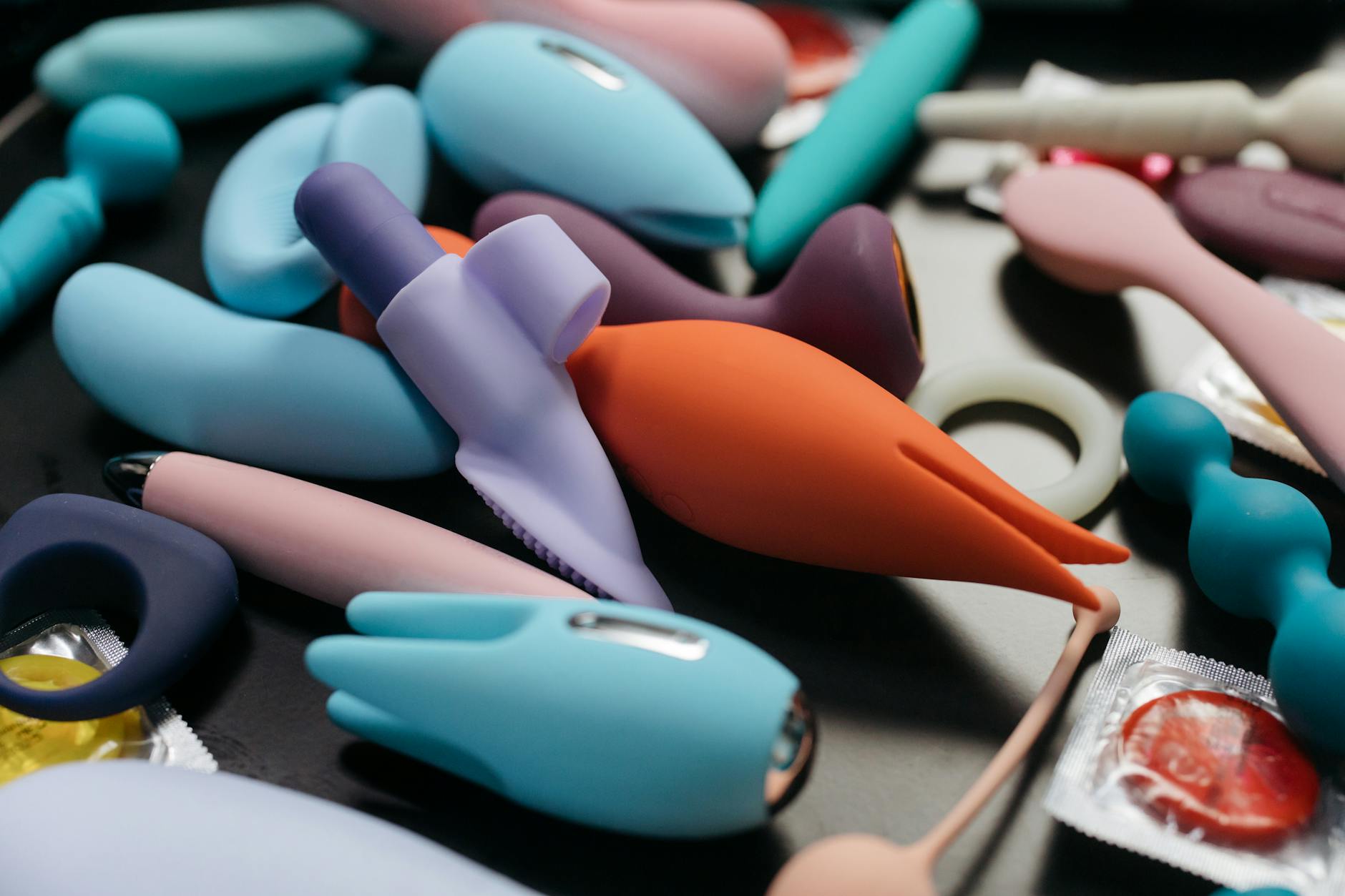
How to Use Lemon Vibrators When Partners Have Different Sexual Interest Levels
Desire mismatches are one of the most common sources of tension in long-term partnerships. Here's how a lemon clitoral vibrator can help you bridge that gap without shame, resentment, or pressure.
Let's be real: one person wants sex twice a week, the other wants it twice a month. One partner initiates, the other rarely does. One craves novelty, the other is fine with routine. These mismatches are so common they're basically the default state of long-term relationships.
What's less common is knowing how to actually manage them without one person feeling rejected and the other feeling pressured. A lemon vibrator doesn't solve desire mismatch, but it does reframe the conversation from "you want me and I don't" to "here's how we both get what we need."
Most couples treat libido differences like a math problem with a solution. If one partner's desire is lower, they assume the fix is to boost it through coercion, guilt, or novelty. If one partner's desire is higher, they assume the other person is broken or unattracted.
Neither is usually true. Desire differences are almost always structural: different energy levels, different stress loads, different hormonal cycles, different definitions of what counts as "sex," different attachment styles, or simply different baseline drives. They're not flaws to fix. They're facts to manage.
Here's what I see in my practice: the couples who navigate this best are the ones who stop trying to make their desire match and instead create separate and parallel pleasure practices. That's where a tool like a lemon vibrator comes in.
When one person wants sex and the other doesn't, what often happens is the higher-desire partner feels rejected, and the lower-desire partner feels pressured. Both of those feelings are real, and both are the source of resentment that can poison the entire relationship over time.
The trap is thinking that if you just had more sex together, the rejected partner would feel less hurt. Sometimes that's true. Often it just means both people are having sex they didn't want, which makes the problem worse.
What actually helps is separating two conversations: "I love you and want closeness with you" and "I also have needs that might be different from yours." These aren't in competition. A lemon clitoral vibrator lets you act on both at the same time.
Here's what I coach couples through when desire levels differ.
First, the higher-desire partner gets to prioritize their pleasure without making it the lower-desire partner's job. This is non-negotiable. Using a lemon vibrator, getting yourself off, taking care of that need is not a betrayal of the relationship. It's the opposite. It's honoring the relationship by not using guilt to manufacture desire.
Second, the lower-desire partner gets to be honest about what they actually want, without pressure. Sometimes that's less frequent partnered sex. Sometimes it's partnered sex that doesn't have to include their own orgasm. Sometimes it's touching and closeness without the expectation of sex.
Third, you create a third lane that's actually for both of you. That might be watching each other. That might be parallel play where you're both using devices like a lemon vibrator at the same time. That might be one person using a lemon sucker while your partner does something else. The specifics matter less than the fact that both people are choosing to be there.
Don't lead with the device. Lead with the honesty.
Say something like: "I've noticed we want different things sexually right now, and I think that's okay. But I also think I need to take care of my own needs sometimes without that being something you have to fix. I'm thinking about using a vibrator sometimes, and I wanted you to know that beforehand so it doesn't feel like it comes out of nowhere."
Then wait. Let them ask questions. The questions people ask ("Do you want me there?" "How often?" "Does this mean I'm not enough?") tell you exactly what fears are underneath, and that's where the real conversation happens.
You might say: "I want you there sometimes, but not always. And this isn't about you not being enough. It's about me taking responsibility for my own pleasure instead of making that your job when you're not in the mood."
This is the conversation that transforms desire mismatch from a source of shame into something you're actually managing as a team.
Approach one: parallel play with your partner present. You use a lemon clitoral vibrator while they do something else in the room. Read, watch, be on their phone. They're not performing; you're not waiting for them to perform. You're both in the same space, both getting what you need. Over time, some couples find this becomes foreplay. Others keep it separate. Both are fine.
Approach two: separate solo time that's predictable. "I'm going to use my vibrator on Thursday nights" removes surprise and shame from the equation. Your partner knows when this is happening, knows it's not a reflection on them, and can plan their own evening accordingly. This prevents the sneaking-around dynamic that actually destroys intimacy.
Approach three: occasional partnered integration. Sometimes a lemon vibrator becomes part of partnered sex because it actually makes things better for both people. The higher-desire partner gets the intensity they want, the lower-desire partner gets to participate without physical exertion, everyone gets off. Why Lemon Clitoral Vibrators Work Better Than Traditional Vibrators for Sensitivity explains how the suction-based design makes this integration easier than with standard vibrators.
One of the biggest questions I get: "How often is too often for them to see me using a vibrator?"
There is no number. What matters is intention and honesty. If you're using a lemon vibrator three times a week and your partner knows about it and is fine with it, that's healthy. If you're using it once a month but hiding it, that's a problem.
The frequency that actually causes issues is the one that's unspoken. The gap between what's happening and what your partner thinks is happening is where resentment lives.
This is common. One person is excited about integrating toys into partnered sex, and the other person is... not. They might feel threatened, unsexy, or just uninterested.
Honestly? That's workable if both people are honest. A lemon vibrator doesn't require participation from your partner to be useful. Use it during your solo time. Use it sometimes when they're in the room but not involved. You're not asking them to perform or validate your pleasure. You're just taking care of yourself.
What usually shifts their resistance over time is seeing that this actually relieves pressure from them. They don't have to perform on a schedule they didn't choose. They don't have to feel guilty about saying no. Your pleasure becomes your responsibility, and that's freeing for both of you.
The first month of integrating a lemon vibrator into a desire-mismatched relationship is usually awkward. Your partner might feel weird. You might feel guilty. You might both be overthinking it.
By month two or three, it often just becomes normal. You use your device sometimes. They know about it. It's not a drama.
By month four or five, something interesting sometimes happens: the relief on both sides creates actual intimacy, and some couples find themselves wanting partnered sex more often because the pressure is gone. Not because the device "fixed" anything, but because taking the shame and obligation out of the equation actually makes people want to be close.
Others maintain the same frequency. That's also fine.
If desire mismatch is paired with real resentment, contempt, or a total emotional disconnect, a sex therapist or couples counselor is worth the investment. A lemon vibrator helps with the logistics of different libidos. It doesn't fix communication problems or unresolved hurt. If you need that help, get it.
You ask them. Directly. "I'm thinking about using a clitoral vibrator sometimes. Does that feel okay to you?" Their answer, and the conversation that follows, tells you everything you need to know. If they say yes but seem anxious, dig in. If they say no, that's information worth understanding before you proceed in secret.
Actually, the opposite often happens. When the higher-desire partner stops using their partner's body to regulate their own mood, and instead takes care of their own needs, the lower-desire partner often feels less pressured and more willing. What kills desire in mismatched couples is obligation and guilt. A vibrator removes both.
Not any weirder than any other intimate act. Weird is just "unfamiliar." After a few times, it feels normal. If it never feels normal, that's useful information about your relationship that's worth exploring with a therapist.
Then you don't do it. Your comfort matters equally. What you can do instead is set a specific time when you're both open to trying it, or keep it as a solo thing. The goal is not to force anyone into anything. It's to make space for both people's needs.
No, and it shouldn't try to. It's not a substitute. It's a supplement. If you're choosing a vibrator over partnered sex consistently because you'd rather be alone, that's a different conversation worth having with your partner.
Start with your own need, not with the device. "I've been thinking about my own pleasure and wondering if using a vibrator sometimes would be okay with you." Then listen. Don't defend. Don't convince. Just understand where they're coming from, and have an actual conversation instead of just an announcement.
Desire mismatch is one of the most solvable relationship problems if you're willing to stop treating it like a failure and start treating it like a fact to manage. A lemon vibrator is a tool that makes that management easier because it lets both people's needs matter at the same time. You don't have to choose between your pleasure and your relationship. You get to have both.