You want pleasure. Your brain is onboard. And then something kicks in that feels like a wall. Your chest tightens. Your thoughts scatter. You second-guess whether this is even working, which makes the anxiety worse, which makes your body clench harder. The moment collapses.
Here's the anatomy of it. Your nervous system has two main states: sympathetic (alert, ready to run or fight) and parasympathetic (relaxed, safe to rest and digest). Arousal only works in parasympathetic mode. When anxiety fires up, your sympathetic nervous system takes over. Blood moves away from your genitals toward your muscles. Your pelvic floor tightens. Lubrication stops. It's the exact opposite of what pleasure needs.
The cruelest part is that you feel the tension happening, which makes you anxious about the anxiety, which deepens the sympathetic activation. Now you're stuck in a loop that feels impossible to break with willpower alone.
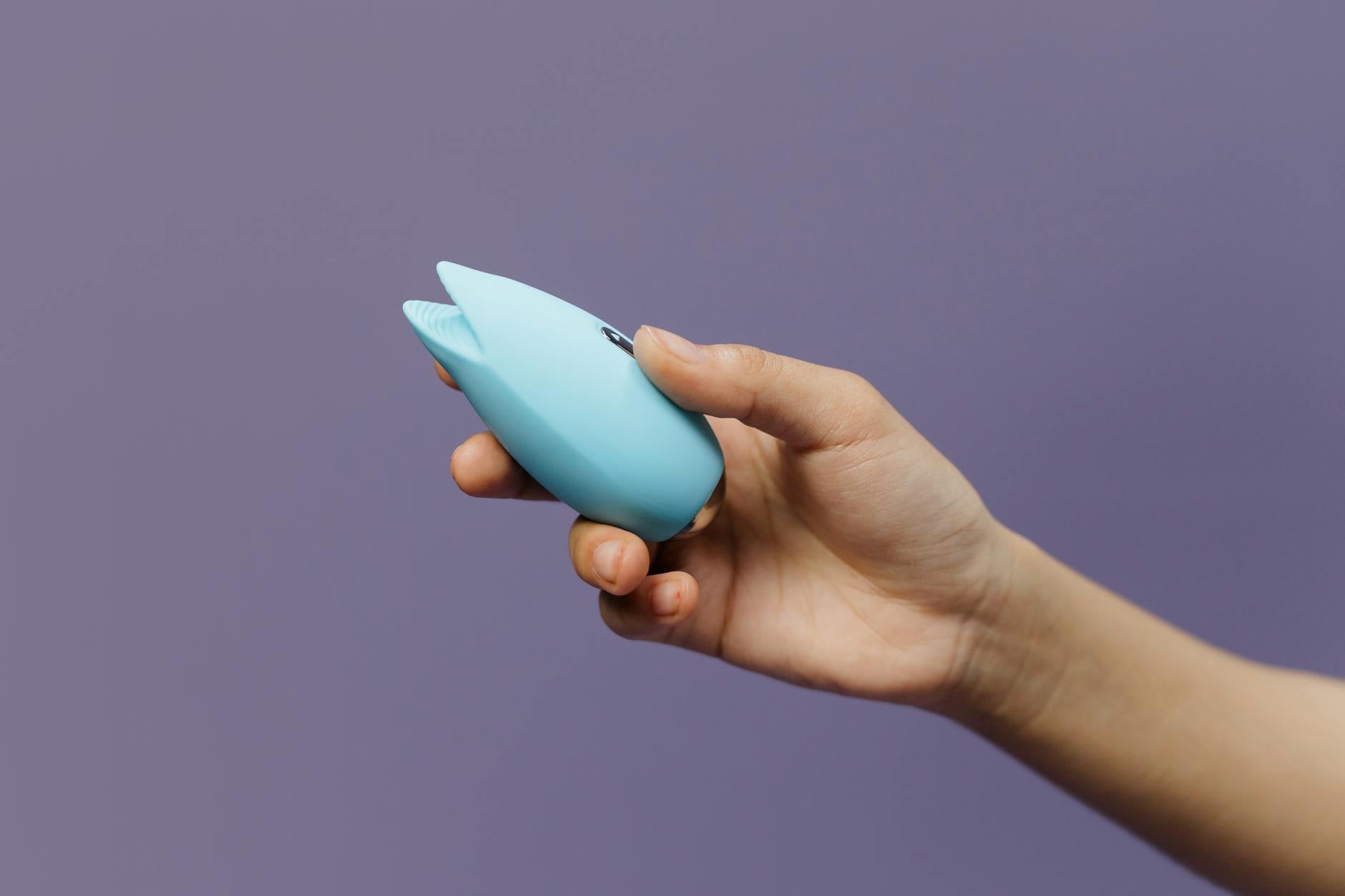
This is where a tool like a lemon clitoral vibrator changes the equation completely. Not because it's magic. Because it works with your nervous system instead of asking you to override it.
Most anxiety during sex comes from one source: performance pressure. Will this work? Am I taking too long? Is my partner getting bored? Is my body responding right?
When you use a traditional vibrator, you're conscious of controlling the pace and managing the sensation. You're still in your thinking brain.
An air-suction device like the Lem works differently. The gentle suction creates a rhythmic, consistent stimulus that your nervous system doesn't have to think about managing. You're not controlling it. You're receiving it. That shift from controller to receiver immediately drops you out of the performance mindset and into pure sensation.
Second, the suction pattern is gentler than direct vibration on sensitive tissue. If you're anxious, your body is probably already tense. Gentleness feels safer. Safer means your parasympathetic nervous system can actually switch on.
If performance anxiety is your wall, these steps help bypass it entirely.
Step one: separate touch from outcome. Set a firm boundary that the goal is not an orgasm. It's not even pleasure, technically. It's sensation. You're investigating what your body feels like when it's relaxed. No pass or fail. No target. This sounds simple and it transforms everything because your brain stops measuring success and starts just noticing.
Step two: create physical safety first. You cannot relax your nervous system if you're uncomfortable. A pillow between your knees, a blanket you trust, privacy with a locked door, your phone face-down across the room. These aren't distractions from pleasure. They're the infrastructure that lets pleasure happen. Spend two minutes setting up like you're building a nest.
Step three: warm up slowly. Start with the Lem on the lowest setting, or even just holding it against your skin without turning it on yet. Let your body recognize the tool and the sensation without jumping to intensity. Five to ten minutes of low stimulation signals to your nervous system that this is safe and gradual. You're training your body to trust the experience.
Honestly, trying to think your way out of anxiety is like trying to calm a storm with a argument. You can't talk your nervous system down.
What works is sensory anchoring. While using the Lem, pick one thing your body is noticing right now that isn't a thought. The warmth of the blanket. The texture of the sheets. The hum of the device. The temperature of the air. Not analyzing it. Just naming it. "Warm. Soft. Rhythmic." You're using your senses to crowd out the anxious chatter.
If a worry thought comes in anyway, don't fight it. Just notice it and return to the sensation. "That thought is there. And I'm feeling the suction on my skin right now." This is what therapists mean by mindfulness. It's not about clearing your mind. It's about gently redirecting attention back to what's actually happening in your body.
If anxiety shows up during partnered sex, the conversation starts before you touch the Lem. "I want to use this alone first, to get comfortable with the sensation. That's not about you. That's me building trust with my own body." A good partner gets this immediately because it's not rejection. It's self-care.
Once you've done solo exploration, using a lemon clitoral vibrator with a partner becomes different. You know the device feels safe. You know what to expect. You're not discovering it in front of someone else while anxiety is firing. That removes so much pressure.
When you do use it together, the same principles apply. Low stimulation first. Slow warm-up. Clear communication about what you're noticing, not what you're achieving. Some partners find it helps to take turns exploring with the device, which makes the whole experience collaborative instead of performative.
Here's what I see in my practice. The first time someone uses a clitoral vibrator without performance pressure, something shifts. The body remembers what safety feels like. Not because the anxiety disappears. But because the nervous system has proof that relaxation is possible.
After a few solo sessions with gentle, pressure-free exploration, the anxiety usually loosens. Not gone. But quieter. Your body starts to believe that pleasure isn't a performance or a test. It's just sensation.
Over weeks, as you continue exploring without the performance frame, something else happens. You learn what your body actually needs, which is different from what you thought it needed. Maybe you like more time to warm up. Maybe you prefer one rhythm over another. Maybe the pressure was the only thing actually in the way.
That knowledge is powerful. It moves you from anxiety ("Am I doing this right?") to certainty ("I know what I like").
Here's when a conversation with a therapist or sex therapist is actually necessary. If your anxiety about pleasure is connected to past trauma, if you're experiencing panic symptoms during sex, or if the anxiety is keeping you from your relationship, a professional can help you rewire the nervous system response in ways that solo exploration can't.
A lemon clitoral vibrator is a brilliant tool for managing performance anxiety in the moment. But it's not a replacement for processing trauma or addressing deeper relationship dynamics. Both things can be true at once.
You deserve pleasure that doesn't come with a side of fear. Whether that's with a tool, with a partner, or with a professional's support, that's worth building toward.
Yes. When you use a tool like the Lem in a low-pressure way, you're teaching your nervous system that pleasure is safe and gradual. Over weeks, your body's anxiety response to sexual stimulation typically softens. You're building a new neural pathway that says "sensation equals safety," not "sensation equals performance pressure." Most people report noticeable shifts after four to six weeks of regular, pressure-free exploration.
That's common and it passes. You're introducing something new to your body. Your nervous system is making sure it's safe. Start even slower than you think is necessary. Use the lowest setting, keep a blanket nearby, have your phone out of reach so you're not tempted to check the time. The first session is about meeting yourself where you are, not achieving anything. Often the second or third session feels completely different.
Opposite, usually. When you know your body's response in a low-pressure setting, you bring that certainty into partnered sex. Less wondering if something's wrong with you. Less vigilance about whether it's working. That actually relaxes both partners. Some people find it helpful to tell their partner, "I used this alone to get comfortable," which makes the partnership feel more collaborative and less like a test.
Start with just breathing and solo touch, without any tool, for a week or two if possible. Let your body settle into the fact that pleasure exploration doesn't have to be goal-oriented. Then introduce the Lem on the lowest setting, still without any pressure toward outcome. The timeline isn't about rushing. It's about your nervous system feeling safe at each step.
That's outside what a vibrator alone can address. If your anxiety is rooted in past trauma, infidelity, or current relationship pain, a therapist who specializes in sexual health can help you work through that in a way that makes room for pleasure again. A lemon vibrator is a brilliant tool for managing performance anxiety. It's not a treatment for deeper trauma. Both things deserve attention.
Completely normal, especially if you've been holding tension for a while. Numbness is often how anxiety shows up in the body. It's a protective response. The good news is that numbness usually shifts quickly once your nervous system trusts that sensation is safe. Keep the stimulation very gentle and low-pressure. Let your body recognize the touch without demanding that it feel intense right away. Sensation deepens as anxiety drops.