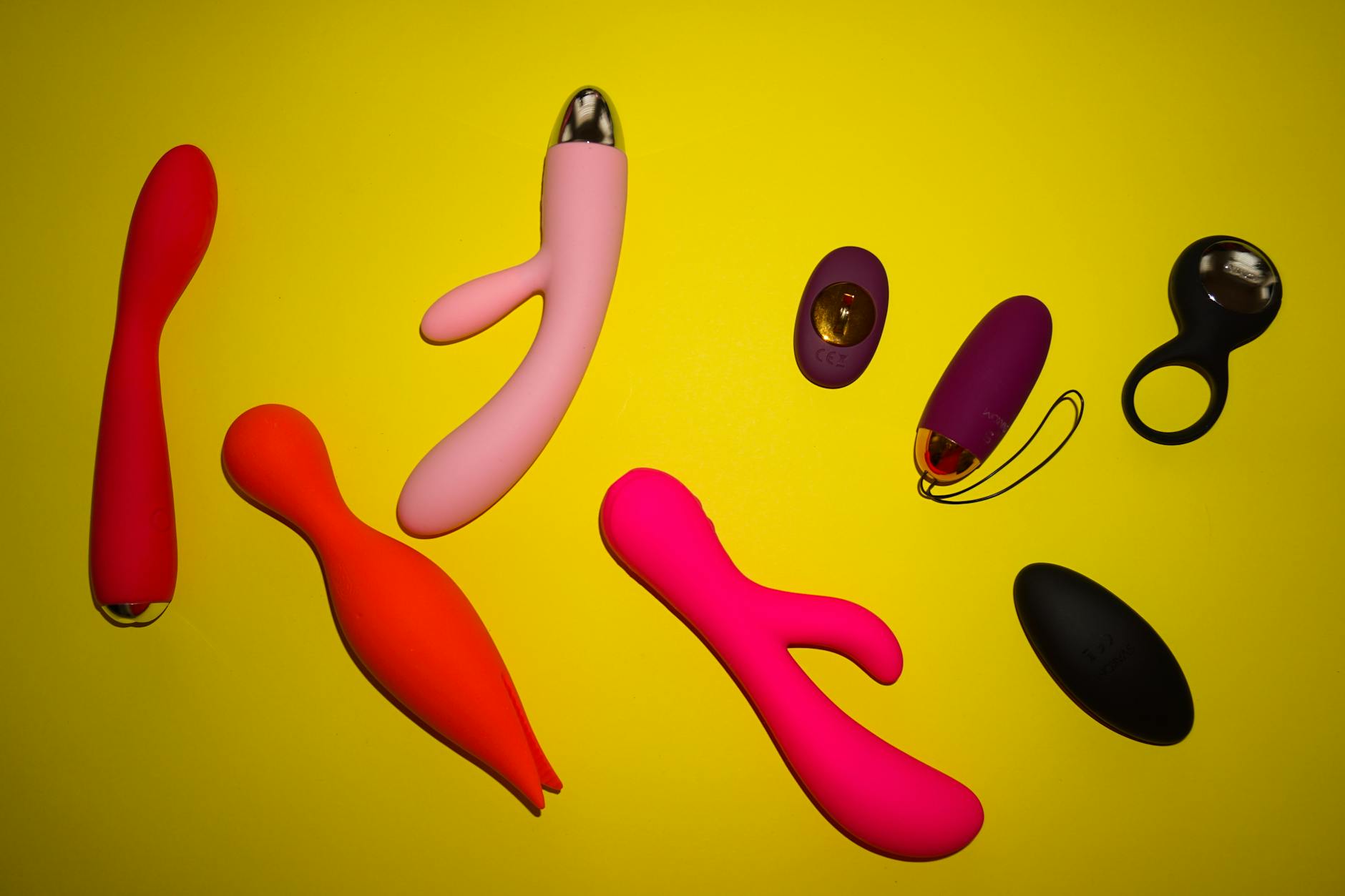
How to Use Lemon Vibrators When You Feel Disconnected From Your Body
Dissociation kills arousal. But the right lemon clitoral vibrator, paired with grounding techniques, can help you rebuild sensation and reconnect to pleasure in a way that feels safe.
Dissociation isn't floating away into a daydream. It's your nervous system hitting the eject button. When you're anxious, stressed, or recovering from trauma, your brain can disconnect you from your body as a protection mechanism. That same mechanism kills arousal. You're present but not present. You can feel touch but it lands like background noise.
Many of my clients describe it as watching themselves from across the room, or as if their body belongs to someone else. Others report numbness that no amount of physical stimulation can pierce. Here's what I want you to know first: this isn't broken. It's your system trying to keep you safe. And it's reversible.
Traditional vibrators deliver constant buzz. That's fine for some bodies, but for people navigating dissociation, constant stimulation can feel like more background noise. Lemon clitoral vibrators use suction and pulsing patterns instead. That rhythmic, wave-like sensation creates what I call "touch that demands attention."
The suction pattern works because it's different from anything your body has learned to tune out. Instead of a steady hum that your nervous system adapts to in seconds, suction creates a pressure pattern that registers as novel. Novel sensation breaks through dissociation more effectively than familiar sensations do.
This is partly neurological. Your brain's sensory gating system (the part that filters out repetitive input) works differently with suction patterns. But it's also partly psychological. When something feels genuinely new, you have to pay attention to it.
Using a lemon vibrator when you're dissociated without grounding is like trying to fill a cup with a hole in the bottom. You need your nervous system online before pleasure can register.
Three grounding anchors I recommend before you even touch a toy:
Temperature contrast. Hold ice cubes in one hand while your other hand rests on something warm. Thirty seconds of this pulls you into present-moment sensation. It's physical evidence that you're here, now.
Breath counting. Inhale for four counts, hold for four, exhale for four. Do this for two minutes before starting. This directly calms your vagus nerve, the highway between your brain and body.
Named sensations. Before using your lemon vibrator, spend ninety seconds deliberately noticing texture. The fabric of your sheets. The temperature of the air. The weight of your head on a pillow. Say each one out loud: "I notice coolness. I notice softness." This trains your attention to stay in your body.
Do all three of these. Don't skip to the toy hoping it will ground you by itself.
When you're reconnecting with sensation, speed matters. Start with the lemon vibrator off. Hold it. Let your hand adjust to its weight and shape. Notice texture. This sounds absurdly basic, but dissociation lives in the details. Your body needs permission to care about small physical sensations before you ask it to process pleasure.
Turn it to pattern one (the gentlest). Many lemon clitoral vibrators have three or four rhythms. Pattern one is often a slow, deep pulse. Not a flutter. A pulse. Apply it to your inner arm first, not your vulva. This teaches your nervous system that this sensation is safe before you introduce it anywhere sensitive.
After two to three minutes on your arm, move to your outer labia if you're ready. Stay there. Not moving to direct clitoral contact. Not rushing. Just staying with sensation and breathing. Notice: does this feel different from the vibration you expected? Does it feel present?
Many people with dissociation report that they notice a subtle "waking up" feeling when the suction rhythm first registers. It's not orgasm. It's just attention. Let that be the win for day one.
If you've been dissociating for months or years, reconnection isn't a one-session project. Build it across weeks. Here's a realistic timeline:
Week one: Grounding work plus toy exploration on non-sensitive areas. Goal: just noticing sensation, no arousal expected.
Weeks two to three: Introduce the lemon vibrator to external genital tissue at pattern one or two. Spend 10 to 15 minutes here. You're training your nervous system that this touch is safe and worthy of attention.
Weeks four to five: If arousal is beginning to show up, you can experiment with slightly higher intensity or pattern changes. But don't chase arousal. Notice it if it arrives; don't demand it.
Week six onward: Most people find that by week six of consistent, grounded practice, sensation is registering differently. Not necessarily intensely, but present.
The timeline stretches longer if you're also managing anxiety or trauma. That's not a failure. That's your nervous system operating exactly as designed.
If you have a partner, they need to understand the goal. The goal is not orgasm. The goal is reconnection. If your partner is pushing for arousal outcomes, you'll stay stuck because their agenda becomes another form of pressure.
The conversation to have: "I'm using this tool to rebuild sensation. I need you to be present but not performance-focused. If I'm feeling numb, that's information, not a problem you need to fix right now." A good partner's job is to hold space, not to push outcomes.
Using a lemon vibrator together while you're grounded can actually deepen connection. The novelty of the sensation plus your partner's presence creates a different safety signal to your nervous system. But only if the pressure to perform is off the table.
If dissociation is severe or trauma-related, a therapist trained in somatic (body-based) therapy is worth the investment. That therapist plus your lemon vibrator becomes a much more powerful combination than either one alone.
You don't need to do this alone. In fact, you shouldn't. Reconnecting to your body after dissociation is real healing work. It deserves proper support.
Honestly, reconnection is slower than you want it to be. Your brain didn't disconnect from your body in a week, so reconnection takes longer than a week too. That's not a sign you're doing something wrong. That's exactly how nervous system healing works. The lemon clitoral vibrator accelerates the process because novelty breaks through dissociation better than traditional stimulation does. But acceleration still means you're walking, not sprinting.
Your pleasure matters. Your body deserves to feel present in it. Start small, stay grounded, and let the timeline be what it needs to be.
Depersonalization (feeling outside your body) and derealization (feeling the world isn't real) are both dissociative responses. Lemon vibrators can help because the novelty of suction breaks through the adaptation that your nervous system creates with familiar stimuli. But they're a tool within a larger healing context, not a cure. If you're struggling with clinical depersonalization, pairing toy use with somatic therapy will get you much better results than the toy alone.
Most people notice a shift in the first two to three weeks of consistent, grounded practice. You might feel a tingling or a sense of presence that wasn't there before. That's sensation returning. Full arousal might take four to eight weeks. The timeline depends on how long you've been dissociated and whether you're addressing the underlying causes (stress, trauma, anxiety) at the same time.
Completely normal. If you feel nothing, it usually means your nervous system is still in protection mode. That's not a failure of the toy or you. It's information. Dial back the intensity, extend your grounding time, and give it another week. If nothing shifts after four to six weeks of consistent practice, talk to a therapist or somatic practitioner. There might be deeper nervous system work needed before sensation reconnection happens.
Yes. Water-based lube helps you notice friction differences and makes the toy more comfortable to use over longer periods. Comfort removes one barrier so your nervous system can focus on sensation. That said, if you're also dealing with vaginal dryness, a good water-based lube becomes even more important. Check out resources on how lemon vibrators help with sensitivity to understand texture choices that support your reconnection work.
Yes, if your stress or anxiety spikes. That's not backsliding. That's just your system responding to pressure. The difference is that once you've reconnected, you know how to do it again. You have a map. The lemon vibrator becomes a tool you can return to, paired with grounding techniques, whenever you need to rebuild that connection.
No. Solo exploration is often better for reconnection because there's no performance pressure. Your only job is to notice what you feel. If you have a partner, they can be present, but the focus stays on your sensation, not theirs. Some people find solo practice for the first four to six weeks helps them rebuild confidence before adding partner presence back in.