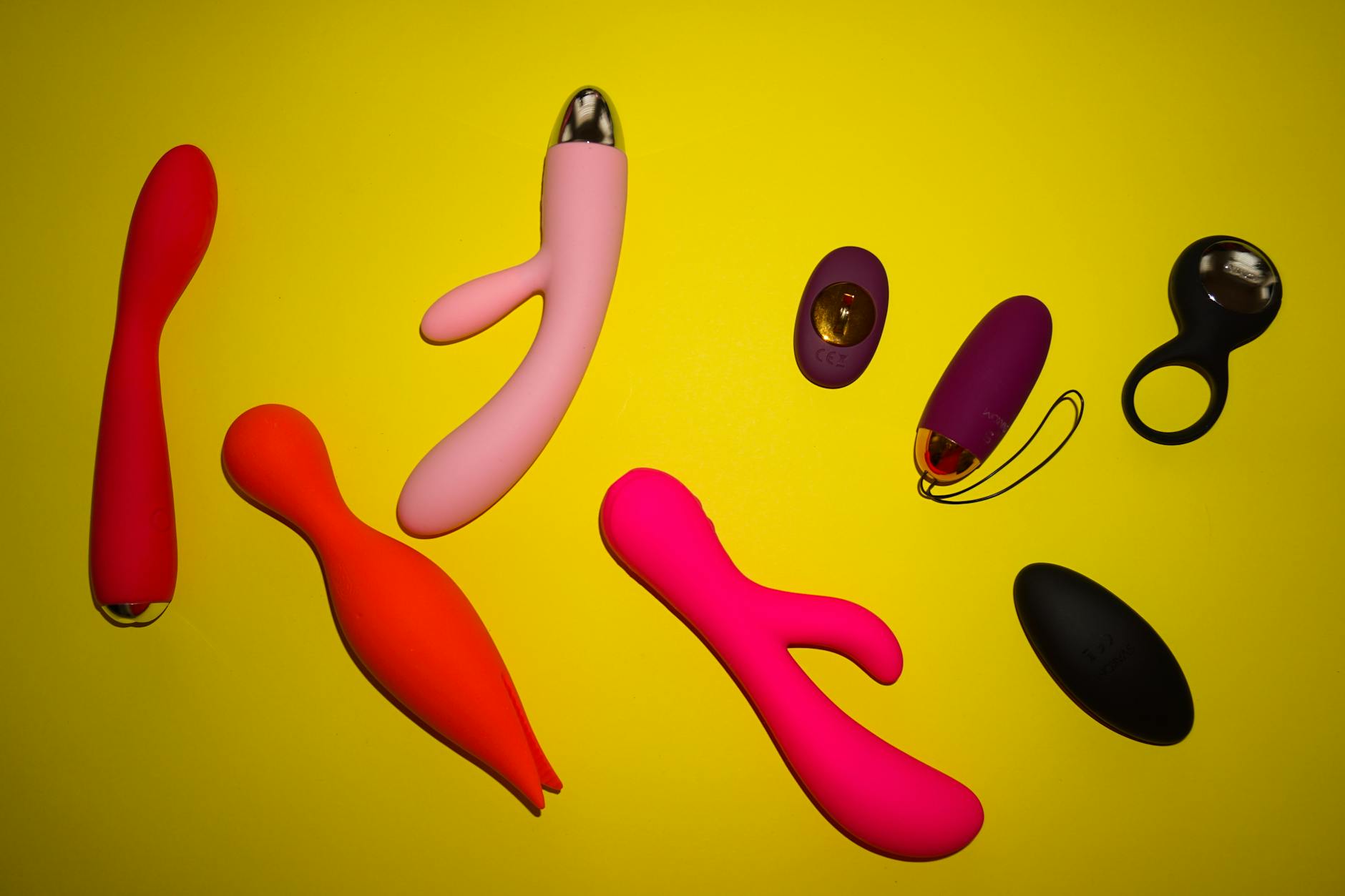
How to Use Lemon Vibrators When You Feel Pressure to Perform
Performance anxiety hijacks arousal and kills desire. A therapist on why suction vibrators break the cycle and help you reclaim pleasure without judgment.
Performance anxiety isn't about being bad at sex. It's about watching yourself have sex instead of being in your body having sex. You're simultaneously trying to experience pleasure and grade yourself on a test only you know you're taking. Spoiler: you always fail, because you're not actually there.
Traditional vibrators ask you to direct the stimulation. You position the toy, control the angle, manage sensation. That requires presence and decision-making. But when you're in your head, presence is exactly what you've lost.
Lemon vibrators use gentle suction. The sensation is so distinct and so localized that your brain doesn't have a choice about where to focus. You're not managing the toy. The toy is managing the experience. That's the difference.
Clinically, this is called external focus of attention. When you stop trying to control the outcome and let the stimulus guide your nervous system instead, the spectator self quiets down. You're not thinking about how you look, how fast you're responding, whether your partner is satisfied with your pace. The suction pattern becomes the only thing worth thinking about.
For people drowning in performance pressure, that's genuinely liberating.
If you're partnered and performance anxiety shows up there, the move is not to bring the lemon vibrator into partner sex immediately. Start alone.
Give yourself 15 minutes with no audience. No partner in the room, no performance metrics, no invisible judge. This is reconnaissance. You're learning what your body actually needs without the pressure of satisfying someone else.
Start on the lowest suction level. Most people with performance anxiety hold their breath and brace their muscles. The suction pattern will pull you toward gentleness naturally. You're not forcing relaxation. You're allowing it because the sensation itself requires it.
Don't chase the orgasm. This is where performance pressure tricks you. Orgasm isn't the finish line for this session. Presence is. If an orgasm arrives, great. If it doesn't, you've still won because you've been there the whole time.
Many of my clients report that this is the first time they've felt their own pleasure without filtering it through someone else's needs or reactions.
Once you've had a few solo sessions and felt the difference, the conversation with your partner matters. Not the logistics. The conversation.
Say something like: "I've been working on being more present with my own body. I want to bring this into our time together. Will you help me do that?" This frames it as you reclaiming something, not you needing help because your partner has failed you. The tone shifts everything.
When your partner understands that the lemon vibrator is about you finding your pleasure, not replacing them or compensating for them, most resistance dissolves. They usually want you to feel good. They just needed context.
In the moment, you don't have to narrate everything. Simple direction works. "I'd love a few minutes alone with this" or "Can we try this together?" Your partner doesn't need to be completely still or quiet. They can be present without performing too. That's often the hidden bonus. When you stop needing them to be a certain way, they relax too.
Three things I recommend to clients using lemon vibrators when performance anxiety is high.
Start with your eyes closed. Vision triggers judgment. Closing your eyes drops you out of the spectator role immediately. You're not monitoring yourself visually, which means you're not grading yourself.
Stay in one spot longer than feels natural. Performance anxiety rushes. When you hold the lemon vibrator in place and let the suction pattern work, your mind has nowhere to go but into sensation. 3 to 5 minutes in one area is enough time for your nervous system to genuinely let go.
Notice what's actually happening before you decide how you feel about it. Don't jump to "Is this good? Am I responding right?" Just observe. The warmth, the pull, the micro-movements your hips make. Observation is neutral. Judgment kills the moment.
Performance anxiety doesn't disappear because you use a lemon vibrator once. But the vibrator becomes a touchstone. You know what it feels like when you're actually present. When you're actually in your body. Once you've felt that, the performance voice gets quieter because you have proof it doesn't have to run the show.
Over time, many of my clients find that the presence they develop alone starts showing up in their partnered sex too. They're less in their head. They're more responsive to actual sensation instead of imagined judgment. And their partners notice because presence is attractive. Real arousal is magnetic.
The lemon vibrator isn't a fix. It's a practice. Every time you use it, you're strengthening the nervous system pathways that say "I can feel good without auditing myself." That's slow work, but it's permanent.
If performance anxiety is severe enough that you're avoiding sex entirely or it's creating conflict in your relationship, a therapist or sex counselor is worth the investment. Not because something is wrong with you, but because you deserve to not white-knuckle through intimacy.
I typically recommend the Gottman Method for couples or somatic experiencing for individual anxiety. Both work with your nervous system, not just your thoughts. The lemon vibrator is a tool within that larger context.
You deserve pleasure without an internal audience. That's not selfish. That's just baseline human experience.
Yes, absolutely. Your pleasure is not contingent on your partner's approval. That said, communication matters. If your partner is resistant, understand why before you assume it's about the vibrator itself. Sometimes it's about feeling replaced or worried about their role. Once you understand the actual concern, you can address it. Usually the concern isn't what you think it is.
Opposite. Most people report the opposite. When you know what your actual arousal feels like without performance pressure, you become more interested in sharing that. You're not desperate for your partner to give you pleasure. You know how to access it yourself. That's weirdly attractive to most partners. The desperation disappears. The desire gets clearer.
Performance anxiety usually travels with you across partners. If you've felt it with multiple people, it's yours to work on. If it only shows up with one specific person, there's something about that dynamic that needs attention. Both are fixable. The path is just different.
Not weird at all. Plenty of people use lemon vibrators for sensation and presence without chasing orgasm. The suction pattern itself is pleasurable. That's enough. In fact, not making orgasm the goal often makes orgasm more likely, because you're not white-knuckling toward it.
That's a different flavor of the same problem. The pressure is just inverted. A lemon vibrator helps because the sensation is so strong and so specific that your body responds on its own timeline, not your head's timeline. You stop trying to force a certain pace and let your nervous system do what it does. Slower usually happens. Faster almost never works.
Yes. Start on the lowest suction level and spend time just noticing the sensation without any agenda. Anxiety about the tool often dissolves when you demystify it. The lemon vibrator is a piece of silicone that creates a gentle pattern. That's it. Nothing magical, nothing demanding. Just a sensation your body can respond to or not.
Performance anxiety tells you that you're not enough. That your body is wrong, your response is too slow, your desire doesn't match some invisible standard. Every time you use a lemon vibrator and actually feel pleasure without that voice, you're proving that wrong. Not in your head. In your nervous system. That's where real change happens.