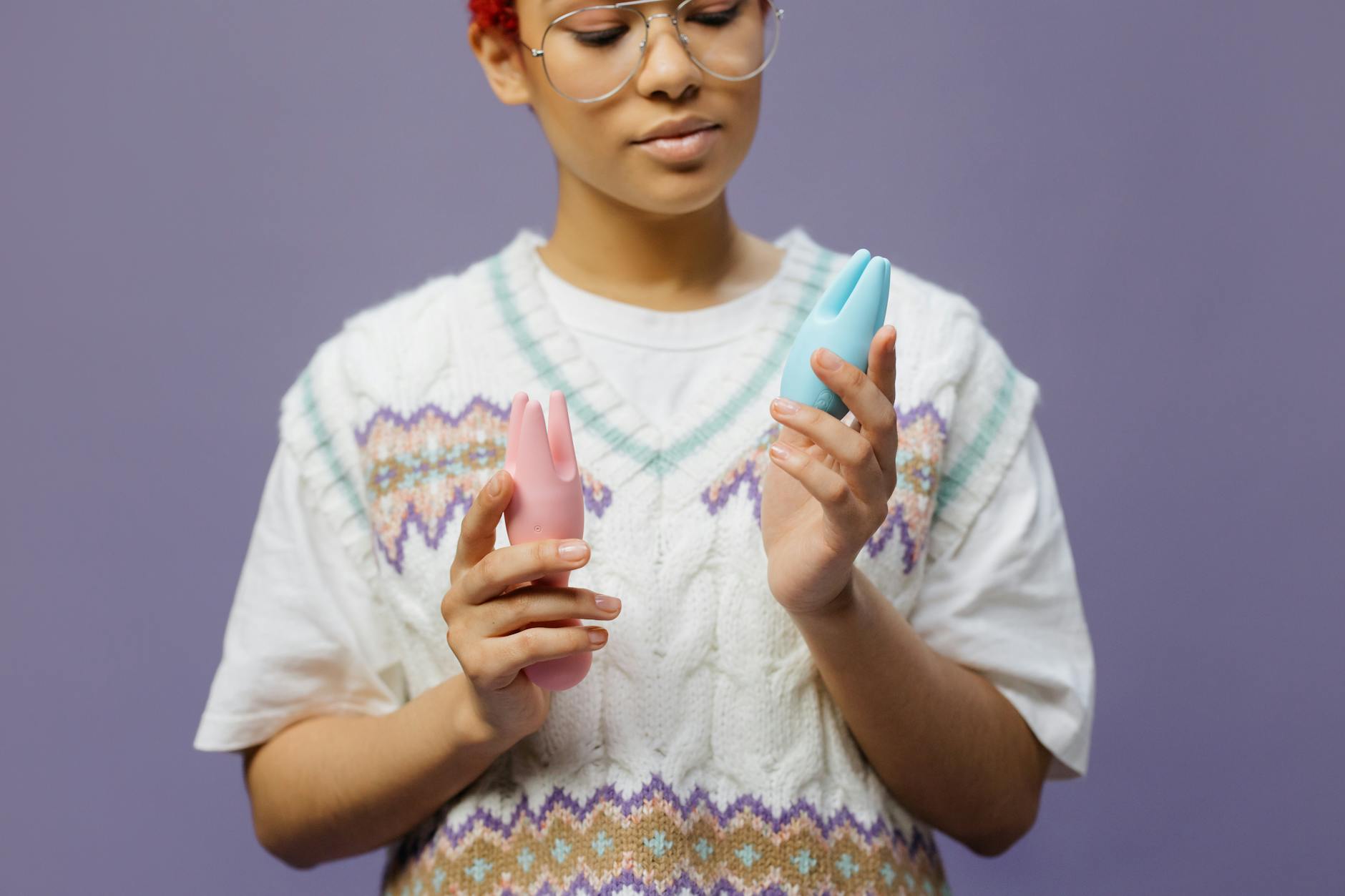
How to Use Lemon Vibrators When You Have Low Libido After Perimenopause
Perimenopause kills desire faster than it kills your ability to feel good. Here's how lemon clitoral vibrators wake up sensation and rebuild arousal when hormones are tanking.
Perimenopause doesn't just lower libido. It erases it. You go from wanting sex to feeling nothing, like someone flipped a switch in your brain and walked away. And the worst part? Everyone assumes it comes back on its own. It doesn't always.
Here's what I see in my practice: people between 40 and 55 showing up convinced they've lost desire forever. But what's actually happening is more specific and way more fixable than that. Your body didn't break. The signal just got quiet.
During perimenopause, estrogen and progesterone fluctuate wildly before they finally drop. This affects desire in three concrete ways.
First, dopamine and serotonin get erratic. These are the neurotransmitters that make you want anything, including sex. When hormones are bouncing around, so do these chemicals. Some days you might have a flicker of interest. Other days, nothing.
Second, blood flow to the genitals decreases. This sounds clinical, but it matters: less blood flow means less natural sensation, which means your body isn't sending the "hey, this feels good" signals to your brain. Your brain doesn't get the feedback loop it needs to build arousal.
Third, touch sensitivity changes. The skin around your vulva has estrogen receptors all over it. When estrogen drops, that tissue becomes thinner and less responsive. You could be touched in a way that used to spark something, and now it feels like nothing. That's not psychological. That's biology.
Here's the kicker: none of this means you've lost the capacity for pleasure. Your clitoral nerves are still there. Your ability to orgasm is still intact. You're just not getting the sensory input you need to trigger it.
A lemon vibrator, like the Lem, uses air-pulse suction rather than traditional vibration. This matters because suction doesn't rely on the same sensory pathway as friction does.
When sensation is dulled by hormone shifts, suction creates a different kind of stimulation. It pulls gently on the sensitive tissue, which activates deeper nerve clusters that traditional vibrators sometimes miss. You get more sensation from less effort, which means your brain gets the signal it needs.
Beyond the physics, there's something else at play. Suction-based lemon sexual toys feel gentler and more controlled than bullet vibrators. They don't overwhelm a nervous system that's already stressed from hormonal chaos. You can start at a low setting and gradually build intensity, which gives your body time to remember what arousal even feels like.
Many of my clients report that they use the Lem first thing when desire has vanished, not because they expect an orgasm, but because the sensation itself becomes a form of self-care. You're giving your body proof that it can still feel good. That proof matters more than you'd think.
If libido is in the basement right now, you can't expect it to show up on demand. You have to build it back slowly.
Start with the Lem at a time when you have zero pressure. Not when your partner expects it, not when you're "supposed to" be in the mood. When you're alone, no timeline, no performance anxiety. Use it for five minutes. That's it. Not trying to come. Just exploring what sensation feels like right now, in this moment of your cycle.
Do this three times a week for two weeks. You're not hunting for pleasure. You're teaching your nervous system that pleasure is still possible. By week three, many people notice a shift. Sensation starts to wake up.
Then add a second step. Before you use the Lem, spend five minutes on something that used to turn you on. Read an excerpt from a book you like. Watch something that genuinely appeals to you, not what you think should appeal to you. Listen to a song that hits different. The goal is to activate dopamine before you touch yourself.
Combine that mental activation with physical sensation from the lemon clitoral vibrator, and your brain starts making new connections. Desire doesn't rush back. But it starts knocking on the door.
If you're in a relationship, your partner probably noticed the libido shift before you did. And they're probably interpreting it as "they don't want me anymore," which is the loudest possible alarm bell.
You have to separate two conversations here. One is about your body. One is about the relationship.
Body conversation: "My hormones are in flux. Desire is harder to access right now. I'm working on it, and here's what helps." That's it. Don't apologize. Don't over-explain. Your body is changing, and you're adapting.
Relationship conversation: "I love you, and I want to stay connected, and right now that doesn't look like what it used to." Maybe it looks like more touching without expectation. Maybe it looks like you using the Lem while they're in the room, which reconnects you to sexuality together without pressure on either of you.
The worst thing couples do is merge these conversations. They become: "I don't want sex anymore, and it's probably because I don't want you." That's not true, and it tanks the relationship while your hormones are already doing the same thing to your body.
If you've been working on rebuilding desire for three months and you're getting nowhere, talk to a menopause-informed doctor. Not a dismissive one. Not one who says "it's just part of aging." A doctor who knows perimenopause.
Hormone therapy isn't for everyone, but for some people in perimenopause, a short course of bioidentical estrogen can stabilize those wild fluctuations just enough to let dopamine and serotonin settle. That can be the reset button desire needs.
Some doctors also prescribe very low-dose testosterone, which directly supports libido. It's a shorter conversation than most people think, and it works for some bodies and not others. But it's worth exploring if nothing else is moving the needle.
There's also genitourinary syndrome of menopause (GSM), where tissues actually atrophy from low estrogen. If penetration or even touch feels uncomfortable, a topical estrogen cream can help in weeks. Don't assume discomfort is psychological. Often it's just tissue that needs support.
Rebuild doesn't happen in two weeks. It happens in three to four months if you're consistent. Some people see shifts in four to six weeks. Some take six months. The variability drives people crazy, but it reflects how unique hormonal transitions are.
What matters is consistency, not intensity. Using the Lem twice a week for four months beats using it intensely for two weeks then giving up.
I also recommend tracking. Not obsessively, but notice when you feel a flicker. Notice what was different on those days. Were you less stressed? Did you sleep better? Did you read something that sparked something? These patterns tell you what actually rebuilds desire for you, not what the internet says should work.
Your body didn't fail. Perimenopause is a transition that temporarily tanks the chemicals and sensations that fuel desire. Lemon vibrators, specifically ones designed like the Lem, create sensation your nervous system can actually feel when everything else feels numb.
This isn't about forcing orgasms or performing arousal. It's about giving your body evidence that pleasure is still available. Once your brain gets that signal, desire often starts rebuilding on its own.
Start small. Stay consistent. Consider professional support if three months passes with zero shifts. And stop waiting for desire to show up uninvited. For now, you go get it yourself. Your body will thank you.
This depends on whether you're still in perimenopause (hormones fluctuating) or postmenopause (hormones stabilized). If you're still fluctuating, libido can shift week to week. Once you fully transition to postmenopause, many people see desire return within three to six months, especially if they're actively using tools like lemon clitoral vibrators to rebuild sensation. Hormone therapy or testosterone can speed this up for some people.
Absolutely. In fact, that's when they work best. The suction-based mechanism of a lemon sexual toy creates deeper nerve stimulation than friction-based vibrators, so it can reach sensation even when surface sensation feels numb. Start on the gentlest setting and gradually increase intensity as sensation wakes up.
Not automatically. For some people, yes. For others, desire remains lower than it was before perimenopause, especially if relationship stress or other life factors are in play. Using tools like the Lem regularly, staying connected with your partner, and getting professional support if needed all help. But there's no guarantee desire returns to your 30s version. That's okay. Different doesn't mean broken.
That depends on your relationship and what feels right. If you want to use it solo while rebuilding desire, that's valid. If you want to include them, that can actually deepen connection during a vulnerable time. The key is doing what feels authentic to you, not what you think you should do.
Yes. Sleep, stress reduction, and cardiovascular exercise all support desire because they stabilize hormones and improve blood flow. Talking to a menopause-informed doctor about whether hormone therapy or testosterone makes sense for you can help. And how lemon vibrators help when arousal builds slowly after fifty covers other strategies specific to slower arousal patterns. Connection work with a partner also matters, especially if perimenopause has created distance.
Most of the time, perimenopause libido drop is purely hormonal. But sudden loss of desire can sometimes signal depression, thyroid issues, or relationship problems that need attention. If you have other symptoms like mood shifts, fatigue, or anxiety, mention that to your doctor. They can rule out thyroid dysfunction or other factors. Why Lemon Vibrators Work Better When Sensation Feels Numb After Depression explores the overlap between mood and sensation if that resonates.
Your desire didn't vanish. It went quiet. Tools like lemon vibrators, paired with patience and the right support, turn the volume back up. Start small. Be consistent. And remember that rebuilding pleasure during perimenopause isn't self-indulgence. It's maintenance. Your body deserves that care. If you have questions about which approach fits your situation best, reach out at /contact and let's talk through it together.