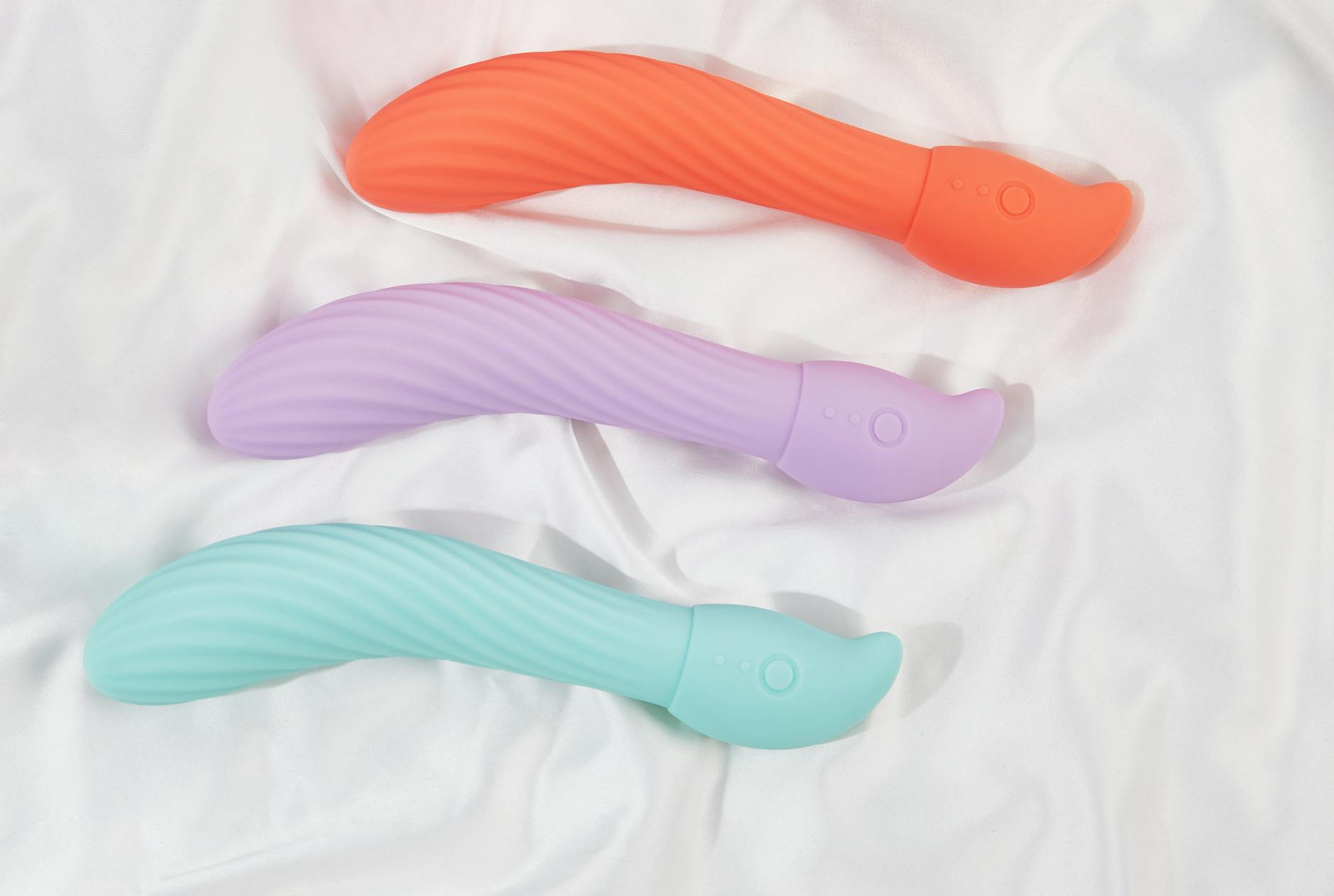
How to Use Lemon Vibrators With a Partner Without Awkwardness
The conversation feels vulnerable. The logistics feel complicated. Here's exactly how to introduce a clitoral vibrator into partnered sex and actually feel good about it.
Introducing a vibrator into your partnered sex life feels like it should be simple. It's not. What gets tangled is rarely the mechanics, but the narrative you both carry about what a vibrator "means." Does it mean you're not satisfied? Does it mean your partner isn't enough? Does it mean something's broken?
None of those things. But the silence around why you want one makes space for those fears to grow.
Here's the reframe: a lemon vibrator or any clitoral vibrator is a conversation tool as much as it's a physical tool. Using one together is about saying, out loud, "Your pleasure matters to me enough that I want to figure this out." That's the opposite of rejection. That's investment.
Most couples don't talk about sex outside of sex. We hint, we redirect, we hope our partner reads our mind. Then we introduce a vibrator, and suddenly there's a physical object sitting in the middle of the bed that's way harder to ignore or soften with subtext.
The awkwardness also comes from a gap in expectations. One partner might see a vibrator as a fun accessory, like trying a new position. The other might worry it's feedback on their performance. Neither person is wrong, but if you're not saying that out loud, you're having two different conversations simultaneously.
Add to that: many of us grew up in a culture where vibrators were whispered about, hidden, or positioned as something you use alone, not something a couple uses together. That old script still runs in the background even when we intellectually know better.
Don't introduce a vibrator during sex the first time. I know that feels more spontaneous and "sexy," but spontaneity here often masks nervousness on both sides, and nervousness creates defensiveness.
Instead, pick a time when you're both relaxed and clothed. Not "we need to talk" serious, just a normal conversation. Sunday morning, while cooking, doesn't matter. You're aiming for calm, not staged.
Here's what to say (or something close to it): "I've been thinking about trying something in bed, and I want to run it by you first. I'm interested in using a vibrator during sex. Not instead of anything we do, just in addition. I think it might help me feel even better, and honestly, I want you to see what that looks like."
Notice what's in that: clear intent (what you want to do), reassurance (not replacing anything), and an invite to participate (I want you to see this). Notice what's not in it: apology, over-explanation, or waiting for permission like you need it.
Your partner will probably have questions. Some of the common ones:
"Does that mean I'm not doing enough?" No. The clitoris responds to clitoral stimulation. Partnered sex doesn't always deliver that, no matter how skilled or attentive your partner is. A vibrator is just a tool for what your body needs.
"Will you still want me without it?" Yes. A vibrator enhances sensation. It doesn't replace touch, attention, or presence. You still want your partner. You want to feel even better.
"Isn't that kind of weird?" Not anymore. Using vibrators with partners is wildly normal now. But also, what matters isn't what's normal in the abstract. What matters is whether both of you want it.
Not all vibrators are built equally for couples. Some are designed purely for solo use. Others work beautifully with a partner's hands or body.
Lemon vibrators, including air-suction designs like the Lem, are excellent for partnered sex because they're responsive and intuitive. You can hand it back and forth, your partner can use it on you while touching you elsewhere, or you can use it on yourself while your partner is inside you. The sensation is precise without requiring a steep learning curve.
When you're shopping, think about size and control. Smaller vibrators (like the Lolly Mini Wand) fit into partnered sex more easily than wands that need two hands. And a vibrator with multiple patterns gives you options without complexity.
You've had the conversation. You've got a vibrator. Now what.
Start with foreplay, the same as usual. The point is not to skip anything or make it feel transactional. You want to be aroused already, so the vibrator amplifies sensation rather than kickstarting it.
At some point, introduce the vibrator. This might be your partner handing it to you, or you reaching for it. Keep it matter-of-fact. No big theatrical moment. It's a tool, and you're using it.
If you're using a lemon clitoral vibrator, start on a lower pattern. You're already aroused, so you don't need maximum intensity. Your partner can stay present. They can watch, touch you elsewhere, be inside you, whatever feels good. The point is they're not sidelined. They're actively participating in the experience.
One thing that helps: keep talking. Not dirty talk necessarily, but "this feels good" or "a little lower" or "I love that you're here." It keeps the connection from feeling like a solo performance.
Where should the vibrator go when you're not using it? Does your partner know how to hold it? Should you make eye contact? These micro-uncertainties can derail the whole thing.
So handle them practically beforehand. Keep it accessible. Show your partner how it works. Talk about positioning. "I'm going to use this while we're like this" is infinitely less awkward than figuring it out mid-moment.
Also: it's okay if the first time feels a little weird. That's normal. You're introducing something new, and your nervous system registers new as alert. Weird doesn't mean bad. It usually means you're paying attention.
Give it a few times before you decide if it's working for you. Nervous system regulation takes a few cycles.
Many people find that introducing a lemon vibrator changes their orgasms. Sometimes more intense. Sometimes deeper. Sometimes just different in a way that's interesting rather than "better."
Your partner might also find it changes things for them. Watching you use a vibrator, feeling you respond to it, being invited into that can actually shift their arousal and experience. That's not a side effect, it's part of the point.
One note: if orgasm becomes the goal, you'll lose some of the texture. The best partnered vibrator experience is when you're in it together for sensation, not for the finish line. Orgasm often follows more easily when you're not white-knuckling toward it.
This matters. After you use a vibrator together, take a moment and talk about it. Not a debrief like a work project. Just a real check-in. What felt good? What felt weird? Do you want to do it again?
These conversations compound over time. They build intimacy because you're naming something vulnerable out loud and staying present with each other. That's deeper than the vibrator itself.
If something didn't work, you adjust. Maybe the timing was off. Maybe the vibrator wasn't the right fit. Maybe you both just needed more practice. This is how partnered sex actually improves, through honest feedback and willingness to experiment together.
Using a lemon vibrator with a partner is not more or less "real" than sex without one. It's just a choice you're making together about what pleasure looks like for your bodies and your relationship. That choice, repeated, is what builds lasting intimacy.
Yes, for many people. Clitoral vibrators like lemon vibrators deliver consistent, precise stimulation that many bodies respond to more easily than manual touch alone. For partnered sex, that can mean faster arousal, stronger sensation, and more reliable orgasms. The key is both partners being genuinely into it, not one person using it while the other feels replaced.
Completely. Lemon clitoral vibrators work beautifully during penetrative sex. You can use one on yourself while your partner is inside you, or your partner can use one on you. The clitoris and vagina are both involved in pleasure, so stimulating the clitoris while your partner stimulates the vagina creates layered sensation. This is actually one of the best ways to use a lemon vibrator together.
That's a real feeling, and it's worth taking seriously without letting it stop you from exploring. The feeling usually isn't actually about the vibrator, it's about vulnerability or fear of not being enough. Start by reassuring them that this is about pleasure, not about them. Then show them how a vibrator isn't a replacement, it's an enhancement. Many partners feel less threatened once they've actually used one together and seen that their presence matters.
Yes. Many people find it harder to orgasm with a partner than alone, for tons of reasons, including performance pressure and distraction. Adding a vibrator removes some of that pressure and provides direct clitoral stimulation. That's not a sign something's wrong. It's just how your body works, and it's worth honoring that rather than pushing through it.
Carefully, and possibly with professional support. If sex is already a source of tension or conflict, introducing a vibrator without addressing the underlying dynamics usually makes it worse. Consider talking to a couples therapist first. They can help you both get on the same page about what you want and how to communicate about it. Then a vibrator becomes a tool you both actually want, not another thing dividing you.
No. Some couples use a vibrator occasionally, some use it every time, some use it only for specific situations. There's no "should" here. It's about what you both want and what serves your pleasure. The best approach is to check in with each other regularly and stay flexible. Your needs change, and that's fine.