Your body doesn't feel the same every day. That's not dramatic or imaginary. It's neurobiology. Hormones shift, blood flow changes, nerve sensitivity fluctuates, and your capacity for orgasm literally reshapes itself across your cycle. Most people know this happens somewhere in the abstract sense, but almost nobody talks about what it means for how toys actually work.
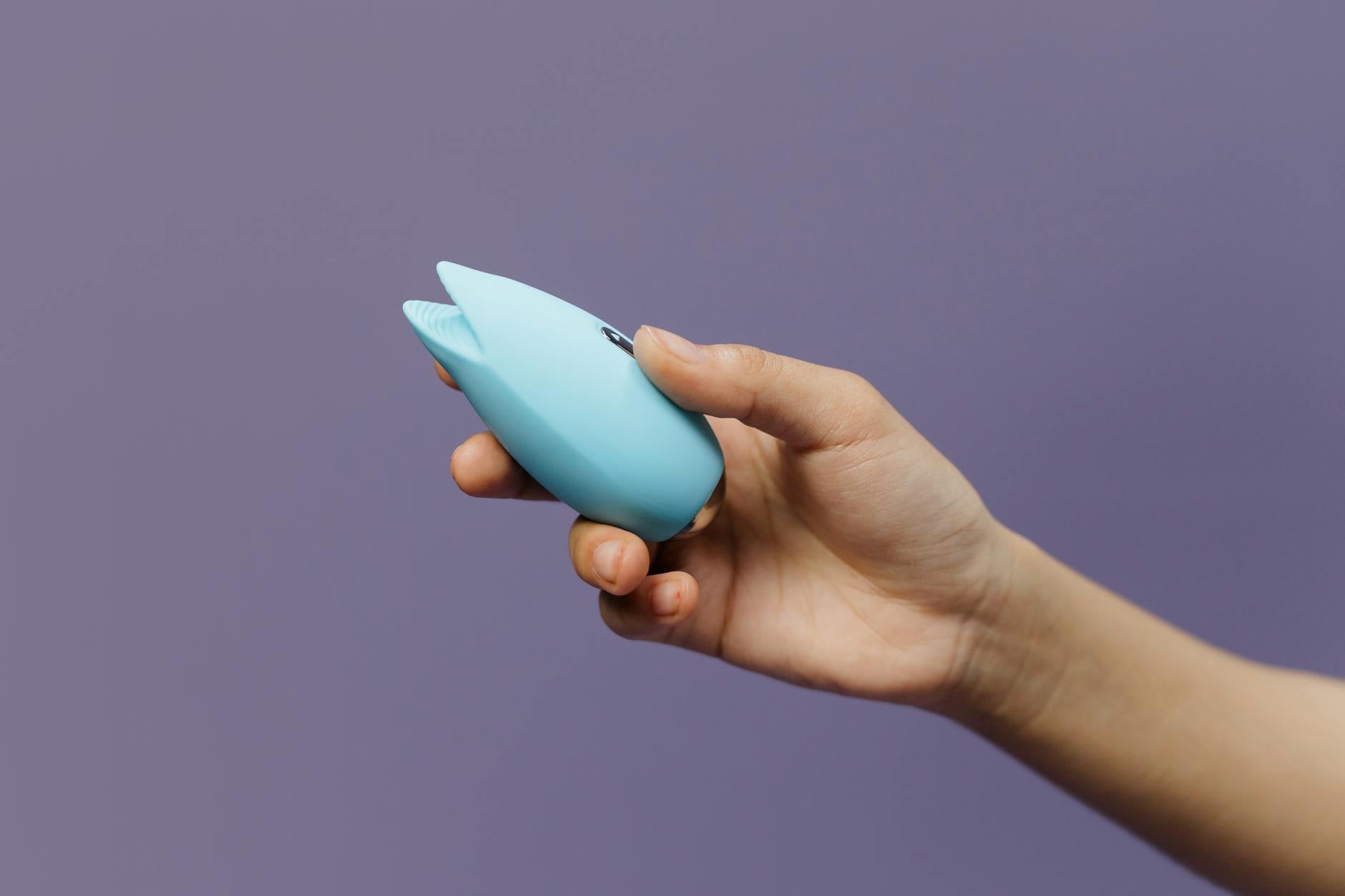
I'm going to be specific about that. If you use lemon vibrators, a lemon clitoral vibrator, or any suction-based toy, understanding where you are in your cycle changes everything about how to use it for maximum pleasure.
This is roughly days 1 through 14 (though everyone's different). Bleeding is happening or wrapping up, and then estrogen starts climbing steadily. Your clitoris is becoming more sensitive, not less. More blood is flowing to the area. Nerve endings are waking up.
Here's what matters: you're ready for stimulation faster, and you might crave more intensity than other times. A lemon vibrator during follicular feels like it has more to work with. You're not fighting your body's natural state. The air-suction pattern of the Lem works particularly well here because your tissues are responsive and want engagement.
My clients often report that the middle of this phase, around day 10 or 11, is when they can achieve orgasm fastest and sometimes with the most intensity. Not always the deepest or most emotionally rich, but fastest and strongest.
What to do: Try lower pattern settings if you usually prefer medium or high. Your body doesn't need as much work to reach pleasure. Start at pattern 2 or 3 instead of jumping to 5. You might surprise yourself with how responsive you are.
About day 14, estrogen surges and your body releases an egg. This is your sexual peak. It's not metaphorical. Testosterone spikes alongside the estrogen surge, and you have the highest nerve sensitivity of your entire cycle.
This is when you might discover that a lemon clitoral vibrator setting you've never noticed before suddenly feels incredible. Stimulation that felt subtle three days ago now feels obvious and delicious. Your clitoris is engorged with blood, tissues are at their most responsive, and your brain chemistry is literally primed for pleasure.
Orgasms during ovulation often feel fuller, because you have more pelvic blood flow. Some people report multiple orgasms are easier to achieve around ovulation. Others find one orgasm during this window hits differently than it does at any other time.
What to do: Pay attention. Really pay attention. Notice what patterns feel best, what intensity you're gravitating toward, whether you're craving longer warm-ups or faster build-ups. You're getting a glimpse of your body at its most responsive. This is valuable information.
Days 15 to 21 or so. Estrogen is still high, but it's starting to drift down. Progesterone is rising. You might notice your energy is different, your appetite changes, and your sexual response is still pretty good, but not quite the peak of ovulation.
Sensitivity is still elevated compared to bleeding, but it's softening. You might find that the same pattern that felt amazing last week now needs slightly more intensity to feel satisfying. That's not your imagination. It's your hormone levels shifting.
Lemon vibrators still work beautifully here. You haven't lost responsiveness. You've shifted out of the peak window, which is different. Some people actually prefer this phase because the intensity is stable rather than fluctuating wildly.
What to do: If you're adjusting patterns, increase intensity gradually rather than jumping two or three settings at once. Let your body tell you what it wants. You might also find that longer warm-ups feel better now, even if you needed quick stimulation during ovulation.
Days 22 onward. Progesterone is high, estrogen is dropping, and you're entering the home stretch before bleeding. This is when pleasure often feels harder to access. Orgasms might take longer. Intensity might feel muted. You might feel less interested in sex entirely.
This is completely normal. It's not a problem with you or your toy. Your nervous system is literally less reactive. Estrogen supports blood flow and sensitivity in the genital area. When it drops, that responsiveness drops with it. Progesterone can feel sedating and introspective.
Where a lemon sucker matters here is that it requires less effort from your body to create sensation. You don't have to generate friction or squeeze or contract. The toy is doing the work. That matters when your body feels slower.
What to do: Go higher on the intensity scale than you think you need to. Pattern 5 or 6 might feel like your baseline here, whereas pattern 3 felt perfect during ovulation. You're not broken. Your nervous system is just less responsive. Use that to your advantage.
Air-suction toys like the Lem work differently than vibration-only devices. They create a gentle vacuum that stimulates a broader area of tissue rather than direct percussion. This matters across your cycle because it means you're not relying on friction or pressure to feel something. You're relying on suction.
During your peak sensitivity windows, that means the suction feels more intense than it might at other times, even on the same setting. During low-sensitivity windows, it means you can ramp up intensity without irritating tissue. The mechanism just plays differently depending on where you are hormonally.
When you understand this, you stop blaming yourself for "not working the way you usually do." You start working with your biology instead of against it.
None of this matters if you don't pay attention to your own pattern. You're not a textbook. You might have a longer follicular phase than average, or a shorter luteal. You might have a cycle that's 26 days or 35 days. You might have multiple peaks and dips rather than a smooth wave.
For two months, I want you to write down three things on days you use a lemon clitoral vibrator:
What day of your cycle you're on (or your best estimate)
What intensity setting felt best and how quickly you reached orgasm
What the orgasm felt like (fast, slow, full, subtle, multiple, single)
After two cycles, patterns emerge. You'll start to see your unique map. Maybe you have two sensitivity peaks. Maybe your luteal phase is longer than average and you need to adjust intensity differently. Maybe your body doesn't follow the standard pattern at all.
Most importantly, you'll stop guessing and start knowing. That knowledge is worth more than any general advice.
I work with a lot of people who assume something is wrong with their sexual response because it's not consistent. They try the same toy the same way every single day and expect the same result. When they don't get it, they feel broken. Most of the time they're just not accounting for hormones.
When you understand that your sensitivity is supposed to shift, you can lean into those shifts instead of resisting them. You pick the right intensity for the right phase. You give yourself permission to want different things at different times. You stop the mental dialogue that says something is wrong with you.
That shift in mindset changes everything. Pleasure stops being a puzzle you're trying to solve the same way every time. It becomes something you're exploring and adapting to, month after month, year after year.
Your body isn't broken. It's cycling. Learn to cycle with it, and lemon vibrators work better, feel better, and pleasure itself becomes easier to access. That's not motivation or positive thinking. That's just biology working the way it's supposed to.
Not functionally. The toy itself works the same way every day. But your body's response to it shifts dramatically. During low-sensitivity phases, a pattern that felt intense last week might feel barely noticeable. It's not the toy failing. It's your nervous system's responsiveness fluctuating. This is why tracking is so useful. You'll see that the toy is consistent. Your body is the variable.
Most people naturally gravitate toward higher intensities during the luteal phase and lower during the follicular and ovulation. Trust that instinct. You're not imagining it. Your body genuinely needs different input at different times. The beauty of a toy with multiple patterns is that you can adjust without switching devices.
You still have hormonal fluctuations, even if they're not on a standard 28-day pattern. Pay attention to your own body independent of the calendar. Track what feels good and when, and look for patterns over months rather than weeks. If you take hormonal birth control, you still have sensation shifts even though your hormones aren't fluctuating the same way. Track that too.
Not at all. Some people have heightened sensitivity during their period and find that lemon suckers feel amazing. Others find it uncomfortable. There's zero rule here. Your period is part of your cycle, and your body's response to pleasure varies just like every other phase. Experiment and see what feels good to you.
Blood flow, nerve sensitivity, pelvic floor tension, and brain chemistry all shift with hormones. During high-estrogen phases, your clitoris is more engorged with blood, which can make orgasms feel fuller and sometimes more intense. During high-progesterone phases, your nervous system is less reactive but you might notice more internal sensation. Neither is better. They're just different. Learning to appreciate both is half the pleasure.
Some people find that hormonal control gives them more predictable pleasure. Others find that it flattens their entire sexual response. This is deeply individual. If cycle-dependent pleasure feels frustrating, it's worth discussing with your doctor. But many people find that understanding and working with their natural cycle, once they get the hang of it, is more satisfying than trying to flatten it.
Understanding how your cycle interacts with lemon vibrators isn't just about achieving orgasm faster or easier. It's about building intimacy with your own body. It's about recognizing that your pleasure is supposed to be dynamic, not static. That you're not broken when you want different things at different times. That your body is working exactly the way it's designed to.
When you use that knowledge with a tool that's responsive to your body, like a lemon clitoral vibrator, pleasure becomes something you're collaborating with your biology to create, rather than something you're fighting to access.
That changes everything. Start tracking. Pay attention. And let your cycle teach you what your body actually wants.